C/C++ SOURCE LIBRARIES FOR EMBEDDED APPLICATIONS  
Product Groups Price/Buy Shopping List Home
 
Back button


Graphic Color Dot Matrix OLED / LCD Driver Library
SSD1339, SSD1338, SSD0332, SSD1331, SSD1332, SSD1335, SSD1351, SSD1353, SSD1783 OLED / LCD controller family

FEATURES

  • All dot matrix OLED / LCD sizes supported by controller. For instance 128x128, 132x132 etc
  • Support for 8, 16 or 18 bit pr pixel RGB in hardware.
  • Additional support for 1,2,4 bit pr pixel software palette for higher data compression
  • Portrait and landscape orientation: 0, 90, 180, 270-degree display rotation.
  • Library is designed for use with embedded processors. Small memory foot print.
  • Can operate directly on display controller RAM. No need for a graphic video buffer in RAM.
  • Support for both 8 and 16-bit parallel bus mode and serial bus mode.
  • Written in C. Portable and C-compiler-independent with standardized I/O functions. Can be used with embedded processors supported by a C, C++, or EC++ standard-conforming compiler.
  • Character and text string functions.
  • Color text and graphic symbols.
  • Support for anti-aliazed fonts
  • Support for transperant text
  • Tabs and column alignment support.
  • Viewports with scroll, auto-wrap and auto-alignment.
  • Switching between multiple viewports.
  • Soft-font support.
  • Mono-space and Proportional fonts.
  • Support for extended character sets. Multibyte character strings, wide-char strings.
  • Support for extended codepage tables, ISO-IEC 10646, and UNICODE.
  • Full UTF-8 support, incl. conversion functions.
  • Graphic Line drawing and pixel setting.
  • Graphic Rectangle and Block drawing.
  • Graphic buffer Cut and Paste.

  • Selectable foreground and background colors with both text and graphics.
  • Free user definition of special symbols.
  • One common function interface supports multiple symbol pixel data formats:
      -   1 bit-pr-pixel (B&W or two-color)
      -   8, 4, 2 bit-pr-pixel grey-level (anti-aliazed)
      -   4, 2 bit-pr-pixel RGB palette
      -   24, 16, 8 bit-pr-pixel RGB
      -   32 bit-pr-pixel ARGB
  • Transperant symbol pixels. Symbols can use any geometric form.
  • Fonts can be stored as two-color (B&W) symbols to optimize memory consumption.
  • Rotation of text and graphic symbols
  • Fast block-swapping of foreground and background colors. Ideal for block cursors in menus and progress bars.
  • Direct video memory I/O, or fast delayed update via RAM buffer.
  • Full support for Virtual Fonts, icons, and pictures stored in external memory devices.
  • Color LCD / TFT / OLED PC-simulator included for debugging of target applications with standard PC compilers.
  • Comprehensive easy-to-read manual with examples.
  • Library is supplied as C source code.
  • No runtime licenses.
  • Graphic Controllers: SSD1339, SSD1338 SSD0332, SSD1331, SSD1332, SSD1335, SSD1351, SSD1353, SSD1783 and equivalents.
  • The library is speed optimized by direct support of SSD1339, SSD1783 hardware accelerator features

Description

Advanced GUI (Graphic User Interface) driver library for Graphic OLED / LCD modules controlled by the SSD1339, SSD1338, SSD0332, SSD1331, SSD1332, SSD1335, SSD1351, SSD1353, SSD1783 OLED / LCD controller family.
Be up and running with your graphic SSD0332, SSD1331, SSD1332, SSD1335, SSD1351, SSD1353, SSD1339, SSD1338 OLED / LCD module application using advanced features like color symbol and icon display, soft-font text and color line drawing, in just a few hours. Save weeks of hard programming.

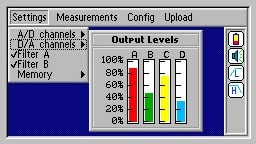
The powerful and flexible function interface provides the basic drawing features which make it simple for a programmer to create screen data fields, pull-down menus, pop-up menus, progress bars, etc. The library facilitates the creation of the GUI "style" and "look" most suitable for a particular target application area.

The library supports soft fonts for both mono-space and proportional graphic text. All font handling is done transparently by the library. The programmer just selects the required font.

Font support for 8-bit character sets, extended 16-bit character sets, national ASCII character sets, ISO-IEC 10646, and UNICODE. Supports dynamic codepage look-up and segmented fonts. This makes it possible to reduce a large font so that it only contains those character symbols used by the application, while the C text strings remain unchanged. Ideal for memory-constrained embedded systems.

Multiple viewports with wrap and scroll. This makes it easy to reserve areas on the display for icons and to prevent overwriting. Within a viewport text can be output as left or right aligned, cut at the edges, or centered horizontally and vertically. Each viewport can have its own font and codepage. Text scrolling can be done individually for each viewport.

Transparent support for graphical multicolor icons and symbols and for black & white (two-color) symbols. A foreground / background color scheme is used for two-color symbols. This makes it particularly easy to handle colors in connection with text and line drawing, and when converting an existing program from a black-and-white OLED / LCD to a color OLED / LCD

Start programming and test before your hardware is ready. The PC-mode simulator for Windows supplied with the library allows you to program and test embedded SSD1339, SSD1338 SSD0332, SSD1331, SSD1332, SSD1335, SSD1351, SSD1353, SSD1783 OLED / LCD applications, using common PC compilers from Borland and Microsoft. Your application source code will look the same in PC-mode and target mode.

The library is written entirely in C using a standardized function syntax for basic I/O read and write. The library is supplied as C source code and can therefore be compiled with C compilers for all common embedded processor families. For instance: 80x51, 80x86, 80C167, 68HC11, 68HC16, 683xx, H8/300, H8/300H, H8S, M16, PIC17, PIC18, PIC24, PIC32, dsPIC, AVR, AT9x, ARM, etc.

The library functions are well modularized. Advanced features can be added successively to the basic SSD1339, SSD1338 SSD0332, SSD1331, SSD1332, SSD1335, SSD1351, SSD1353, SSD1783 OLED / LCD driver system. For instance: graphic support, viewport support, symbol and icon support and soft-font text support. This makes it easy to adapt the library to the requirements of your application.

The same OLED / LCD driver function interface exists for different OLED / LCD controller types. This makes it easier to create portable and reuseable application software. Changing to OLED / LCD modules using another OLED / LCD controller type is now a simple task.
Furthermore the OLED / LCD driver interface for color OLED / LCD controllers is upward compatible with the OLED / LCD driver interface for the Black & White OLED / LCD controllers. This creates a secure migration path when moving an application from using a B&W display to using a color display.

Function overview Version 6.2-17
Basic initialization and error handling
ginit Initialize display module
ghw_puterr Initialize display and output an error message at the center of the display
gexit Release display resources
gsetupdate Activate / deactivate delayed update
ghw_err Report error status from hardware drivers
ghw_dispoff Turn off display screen
ghw_dispon Turn on display screen
ghw_cont_set Set LCD contrast level (absolute)
ghw_cont_change Change LCD contrast level (relative)
Basic text functions
gputs Print a string.
The string may be an (UTF-8) multibyte encoded string.
gputch Print a character
gputcsym Print a symbol as a character
gputsrot Print a string rotated in any direction.
The string may be an (UTF-8) multi-byte encoded string.
gputchrot Print a character in any rotated orientation
ggetcxpos Report cursor x position in character coordinates
ggetcypos Report cursor y position in character coordinates
gsetcpos Set cursor position in character coordinates
gsetpos Set cursor position in graphic coordinates
gsetcursor Set cursor size and type
ggetfw Default width of current font
ggetfh Height of current font
gfgetfw Default width of a named font
gfgetfh Height of a named font
ggetmbc Fetch a char or a multibyte character from a string. The string pointer is advanced to the following character
gstrlines Report number of text lines in a multi-line string
gsetspch Set text character spacing. Add extra pixel space between text string characters
ggetspch Report text character spacing
gsetspln Set text line spacing. Add extra pixel space between text lines
ggetspln Report text line spacing
Basic graphic functions
gcarc Draw corner arcs as full circle, half circle, quarter circle. Draw as perimeter, as filled area, or both.
gcircle Draw circle as perimeter or as filled area. Any perimeter fragment using any radius can be drawn. Center may be located outside screen.
gsetpixel
gcsetpixel
Write logical pixel using current viewport color settings or a specific color.
ggetpixel
gcgetpixel
Read pixel as logical value or as color.
grectangle
gcrectangle
Draw a rectangular box using the current viewport color settings or a specific color.
groundrec Draw rectangle with rounded corners. Create any figure from a pure rectangle to a circle. Draw as perimeter, as filled area, or both.
gmoveto Set start position for line draw
glineto Draw line from last position to new position
ggetxpos Report current pixel x position
ggetypos Report current pixel y position
ghw_rdblk Read display area to buffer
ghw_restoreblk Write the display area stored in the buffer back to the same position as it was read by ghw_rdblk
ghw_wrblk Write buffer to display area
ghw_blksize Calculate needed buffer size for read block
Symbol (icon)
gputsym Output a graphic color or B&W symbol
gputsymrot Output a graphic color or b&w symbol using any rotation direction. Rotation anker can be outside symbol or screen creating a pendule effect.
ggetsym Read display area as a symbol in the current color mode
gfillsym Fill area with a color or B&W symbol
gsymsize Calculate minimum buffer size to hold a symbol in the current color mode
ggetsymw Get the pixel width of a character symbol using the current font
gsymh Report pixel height of symbol
gsymw Report pixel width of symbol
Viewport functions
ggetvp Report graphic viewport size
gsetvp Set graphic viewport size
ggetvpnum Report viewport number
gsetcvp Set character viewport size
gsetupvp Initialize all viewport parameters
ggetvpw Report current viewport width
ggetvph Report current viewport height
gselvp Select viewport to be current
gfillvp Fill rectangular area in viewport
ginvertvp Invert rectangular area in viewport
gresetvp Reset viewport to default
gresetposvp Reset viewport coordinates to full screen. Leave font and text mode setting unchanged
gclrvp Clear viewport
gsetmode Set normal, inverse, and alignment modes
gscrollcvp Scroll character viewport
gvpxl Report left edge coordinate for viewport
gvpxr Report right edge coordinate for viewport
gvpyb Report bottom edge coordinate for viewport
gvpyt Report top edge coordinate for viewport
ggetapp Get pointer to application-specific data for viewport
ggetvpapp Translate application-specific data pointer to viewport number
ggetcolorb Report background color for viewport.
ggetcolorf Report foreground color for viewport.
gsetcolorb Set background color for viewport.
gsetcolorf Set foreground color for viewport.
ghw_palette_wr Write in a new color palette.
ghw_palette_rd Read out current color palette.
Tabulator functions in viewports
gsettab Set a tab position
gsettabs Set tab spacing
gclrtabs Clear tab(s)
Soft-font functions
gfgetcp Report codepage for a named font
ggetfont Report font for the current viewport
gselfont Select current font for viewport
ggetcp Report current codepage for viewport
gselcp Set current codepage for viewport
gpstrheight Report height in pixels of a multi-line string based on the current font
gpstrlen Report string length in pixels with current font
gpstrheight Report width in pixels of the longest line in a multi-line string based on the current font
gpwordlen Length in pixels of first word in string with current font
gcursorblink Cursor blink function
Display multi-screen functions
gscinit Initialize a newly allocated screen buffer and make it the owner of the resources.
gscisowner Check if a screen buffer is the current owner
gscsize Calculate required size for screen buffer allocation
gscsave Save the complete screen and library settings in screen buffer
gscrestore Swap to another screen. Restore screen and library settings from screen buffer and make it the current owner
Wide-char text functions
(Require wide-char support from compiler)
gpstrheightw Report height in pixels of a multi-line wide-char string based on the current font
gpstrlenw Report length in pixels of a wide-char string based on the current font
gpstrheightw Report width in pixels of the longest line in a multi-line wide-char string based on the current font
gpwordlenw Length in pixels of first word in wide-char string with current font
gputchw Print an extended character (wide-char or multibyte character)
gputchwrot Print an extended character in any rotated orientation
gputsw Print a wide-char string
gputswrot Print a wide-char string rotated in any direction.
Multibyte-char text functions
(UTF-8 or compressed multibyte)
gwcmbsize Report number of multibyte characters needed to hold a wide character value
gmstrlen multibyte length of string in number of bytes (storage length)
gmstrlenw Report multibyte string length needed to hold wide-char string (storage length)
gmsstrlen Report logical symbol length of multibyte string (= corresponding size of wide-char string)
ggetmbc Convert multibyte to wide character
gwctomb Convert wide char to multibyte
gwstrcpymb Copy and convert wide-char string to multibyte string
gmbstrcpyw Copy and convert multibyte string to wide-char string


For more information see also the OLED / LCD driver library FAQ list


Start download of the Graphic Color OLED / LCD driver demo for Windows. (colordmo.zip = 325K bytes)
This demo has been generated with the Win 32-bit display simulator used with Microsoft MSVC 6.x or Borland C++ Builder 5.x


See also the Graphic Color LCD Icon Editor development tool
This tool makes it particularly easy for you to create your own graphic logo and symbols. With the Color LCD Icon Editor you can also create new soft fonts and palettes for the Graphic OLED / LCD library or import and convert standard soft fonts used on the PC.


Additional development support products:


See also the Extended Graphic Font library
Source library with a large number of ready made fonts. Support for Unicode, Iso8859 or Dos code-pages. Contains characters from many languages, for instance: all latin characters, Greek, Cyril, Armenian, Hebrew, Arabic, Thai, Georgian, Hangul, Ethiopic, Cherokee, Runic, etc. Can be used directly with the SSD1339, SSD1338 SSD0332, SSD1331, SSD1332, SSD1335, SSD1351, SSD1353, SSD1783 OLED / LCD driver library. Download Font Library data sheet

See also the Extended Asian Graphic Font library
Source library with large Asian fonts. Contains character symbols from many languages, for instance: Simplified Chinese, Traditional Chinese, Japanese, Korean, CJK unified ideographs, Katakana, Hangul, all latin characters, Greek, Cyrillic, etc. Can be used directly with the SSD1339, SSD1338 SSD0332, SSD1331, SSD1332, SSD1335, SSD1351, SSD1353, SSD1783 OLED / LCD driver library.


See also the IOTester development kit
IOTester is the easiest way a C/C++ program developer can get direct access to controlling peripheral I/O hardware in an embedded system. With this tool embedded GUI interfaces can be tested on the PC, using common compiler tools, while all I/O operations are done on the real GUI hardware (for example, write to OLED / LCD display, poll of keyboard, etc). This is the most convenient way to test the "look and feel" of a new GUI interface. Can be used directly with the OLED / LCD driver library.


See also the OLED /LCD interface prototyping board for 0.5, 0.8, 1.0, 1.2 mm pad pitch,
or OLED / LCD interface prototyping board for 0.3, 0.5 mm pad pitch
Prototyping board for easy connection to the flex print cables and FCC/FCB connectors used by some OLED / LCD modules. Conversion to standard ribbon cable connectors. Hole area for mounting of OLED / LCD-related components.


Back button To top
Copyright© 2006-2009 RAMTEX International ApS. All rights reserved.